
In a world where everything seems to be racing towards 5G, it’s easy to feel left behind if you’re still clinging to your trusty 4G SIM. But fear not! If you’ve just unboxed that shiny new 5G iPhone, you might be wondering if your old SIM card can hitch a ride on this high-speed train. Spoiler alert: it can, and it’s not as complicated as trying to explain TikTok to your grandparents.
Using a 4G SIM in a 5G iPhone is like putting a turbocharger on a reliable sedan. Sure, you won’t be zooming down the highway at lightning speed just yet, but you’ll still get a smooth ride. So, let’s dive into the nitty-gritty and uncover how you can make the most of your new device without breaking the bank on a new SIM.
Overview of 4G and 5G Technology
4G technology primarily focuses on providing high-speed internet access, with speeds averaging 10 to 100 Mbps. Enhanced mobile broadband, ultra-reliable low latency communication, and massive machine-type communications characterize this generation’s offerings. Users benefit from faster browsing, smoother streaming, and improved call quality.
5G technology takes these capabilities a step further. It supports speeds of up to 10 Gbps and significantly reduces latency to about 1 ms. This rapid advancement enables new applications, such as augmented reality and smart city solutions. The infrastructure of 5G networks incorporates advanced antenna technology and a denser network of small cells.
Compatibility between 4G and 5G results in a seamless transition for users. A 5G iPhone can still function effectively with a 4G SIM card. Users, however, may not access the full benefits of 5G services without upgrading their SIM. While 4G retains dependable performance, transitioning to 5G enhances the overall experience.
Adopting 5G technology allows for better connectivity in crowded areas, including concerts and stadiums. Furthermore, industries such as healthcare and automotive rapidly adopt these advancements, creating innovative solutions. Organizations embracing 5G gain competitive advantages, enhancing operations and customer experiences.
Understanding the differences between 4G and 5G is essential for users considering upgrades. While 4G offers reliable service, the full potential of a 5G iPhone shines through the new network. Users can maximize their devices’ performance by staying informed about technology advancements and network capabilities.
Compatibility of 4G SIM in 5G iPhones
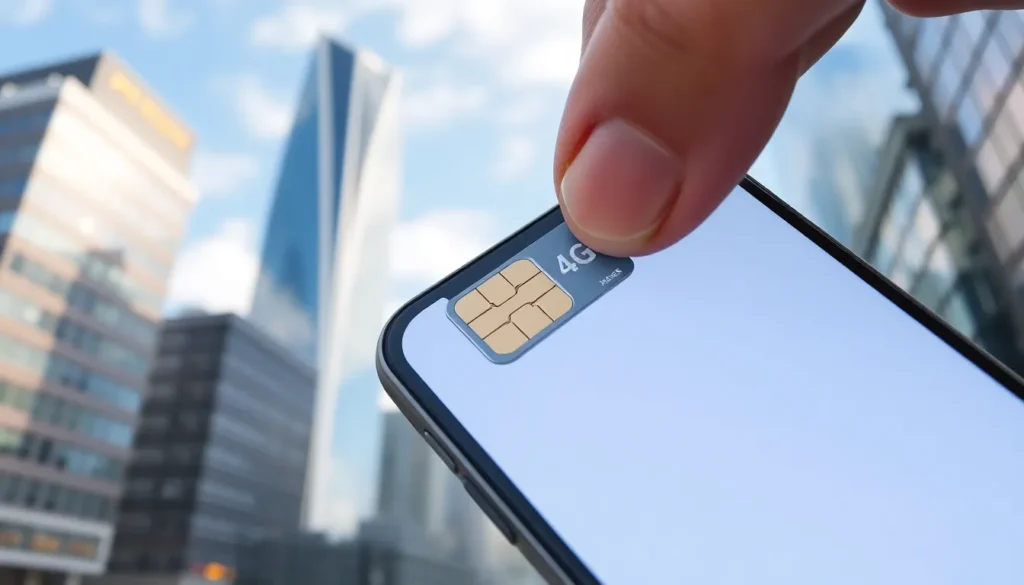
Using a 4G SIM in a 5G iPhone is entirely feasible. As iPhones transition from 4G to 5G, compatibility remains intact for users retaining their 4G SIM cards.
Understanding Dual Compatibility
Dual compatibility exists for 4G SIM cards in 5G iPhones. Users can seamlessly insert their old SIM cards into new devices without issues. While the iPhone may connect with 4G networks, it won’t fully harness the advanced capabilities of 5G technology. Users experience enhanced performance compared to older devices, even if they can’t access the full spectrum of 5G speeds. Device upgrades improve connectivity overall, creating a satisfying user experience even with existing SIM cards.
Network Requirements
Network requirements dictate how effectively a device utilizes 5G capabilities. Users must connect to a 5G network for optimal performance, which often demands specific infrastructure. Different carriers offer various 5G coverage areas; hence, it’s vital to check local network availability. A 4G SIM will provide decent service, but switching to a 5G-enabled SIM promotes greater speeds and reliability. Upgrading the SIM often unlocks the iPhone’s potential, particularly in densely populated regions where network congestion occurs.
Advantages of Using a 4G SIM in a 5G iPhone
Using a 4G SIM in a 5G iPhone offers several advantages, allowing users to enjoy reliable connectivity without immediate need for an upgrade.
Cost Considerations
Cost remains a significant factor for many users. Utilizing a 4G SIM eliminates the expense of purchasing a new 5G-enabled SIM. Users can maintain current data plans without interruption. While some may consider upgrading, current 4G services often deliver satisfactory performance, especially for everyday tasks. Users save money while still accessing essential features. Many users can prioritize their budget while enjoying reasonable speeds.
Availability of 5G Networks
Access to 5G networks varies widely by location. In urban areas, robust 5G infrastructure often provides superior connectivity, while rural regions may still rely on 4G. Users in areas lacking 5G can still experience reliable service with their 4G SIM. Many carriers continue to expand their 5G coverage, so users may benefit from improved connectivity in the future. Understanding local network availability helps users make informed decisions about potential upgrades.
Disadvantages of Using a 4G SIM in a 5G iPhone
Using a 4G SIM in a 5G iPhone presents some drawbacks. While functionality exists, users encounter limitations.
Limitations in Speed
Speed suffers significantly when using a 4G SIM. With 4G offering speeds between 10 and 100 Mbps, users miss out on the potential of 5G speeds that can reach up to 10 Gbps. Enhanced applications such as augmented reality and smart city technologies become less accessible. Network congestion becomes more prevalent in crowded areas, limiting performance even further. Users may notice slower response times during high-traffic periods. Accessing high-bandwidth content like 4K streaming might result in buffering or slow download times. Those who rely on smooth connectivity for work or entertainment may experience frustrations.
Future-Proofing Concerns
Using a 4G SIM limits future-proofing capabilities in a rapidly evolving technological landscape. As 5G networks expand and develop, reliance on a 4G SIM restricts access to enhanced features and services. Many advanced applications require the low latency and high speeds that only 5G can provide. Delays in accessing essential services may hinder user experience. Carriers continue to upgrade their networks, which makes a 5G SIM an attractive option for long-term use. Transitioning sooner ensures that users stay aligned with the latest technological advancements. Ignoring this shift may result in spending more time and effort later to catch up.
Using a 4G SIM in a 5G iPhone is entirely feasible and allows users to maintain reliable connectivity without immediate costs. While it won’t unlock the full potential of 5G speeds and capabilities, it still provides satisfactory performance for everyday tasks. Users should consider their local network availability and future needs when deciding whether to upgrade their SIM.
As 5G networks continue to expand, transitioning to a 5G-enabled SIM can enhance user experience and ensure access to the latest technological advancements. Making informed choices about SIM cards can help users maximize their new devices while balancing cost and performance.

