
In an era defined by rapid advancements, space technology stands at the forefront of innovation. From satellite communications to interplanetary exploration, these technologies have transformed how humanity interacts with the cosmos and each other. As countries and private companies race to unlock the mysteries of space, the implications for science, industry, and everyday life are profound.
The evolution of space technology not only enhances our understanding of the universe but also drives developments on Earth. With applications ranging from GPS navigation to climate monitoring, the benefits are far-reaching. As this field continues to evolve, it promises to reshape our future in ways we can only begin to imagine.
Overview of Space Technology
Space technology encompasses a wide range of tools, methods, and innovations used for exploration and communication beyond Earth’s atmosphere. Key areas include satellite development, interplanetary travel, and robotic exploration. These advancements facilitate critical applications that enhance daily life, scientific research, and global communication.
Satellite Development
Satellite technology plays a crucial role in modern society. Satellites enable global positioning systems (GPS), communications networks, and Earth observation. For example, over 30 satellites in the Global Positioning System assist in navigation, providing highly accurate location data. Earth observation satellites monitor climate change by collecting data on atmospheric conditions, land use, and natural disasters, helping scientists analyze environmental challenges.
Interplanetary Travel
Interplanetary travel encompasses missions to other planets and celestial bodies. Robotic spacecraft, such as Mars rovers, allow scientists to gather data about extraterrestrial environments. The Mars Rover Perseverance, launched in 2020, collects soil samples to search for signs of ancient microbial life. Meanwhile, missions to Jupiter and Saturn enhance understanding of planetary formation and the potential for life beyond Earth.
Robotic Exploration
Robotic exploration involves unmanned vehicles designed to traverse inhospitable environments. These technologies reduce risks associated with human presence in space. Unmanned aerial vehicles (UAVs) operate in various atmospheres, while deep-space probes gather data from remote locations. NASA’s Voyager probes, launched in the 1970s, continue to transmit important information about the outer solar system.
Applications on Earth
The impact of space technology extends back to Earth, influencing multiple sectors. Satellite communications enhance internet connectivity in rural areas, while weather satellites relay critical forecasts for agricultural planning. Furthermore, advancements in space technology contribute to national security through reconnaissance and surveillance capabilities.
Future of Space Technology
The future of space technology holds immense potential. Innovations in reusable rocket technology, such as SpaceX’s Falcon 9, promise to reduce launch costs and increase access to space. Emerging technologies in artificial intelligence and autonomous systems will likely play significant roles in future explorations and missions. Collaborative projects, such as the International Space Station, continue to advance scientific research and international partnerships.
Space technology shapes not only our understanding of the cosmos but also influences everyday life across the globe. Its continuous advancements drive scientific progress and inspire future generations to explore and innovate.
Historical Development of Space Technology
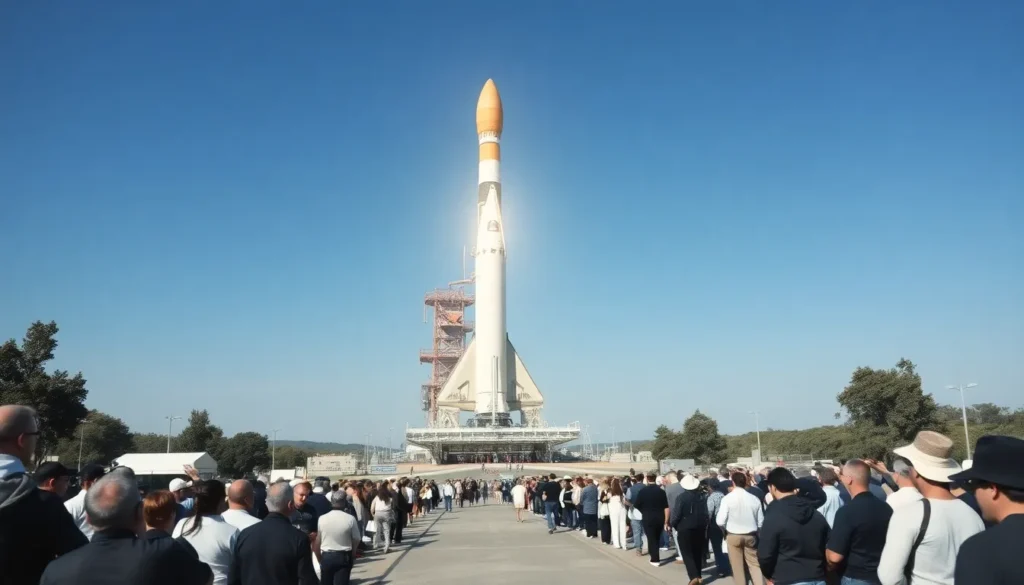
The development of space technology spans several decades, with pivotal events marking its progress. Early exploration laid the groundwork for today’s technological advancements.
Early Space Exploration
Early space exploration began in the 1940s, primarily driven by military interest in rocket technology. In 1957, the Soviet Union launched Sputnik 1, the first artificial satellite, paving the way for space exploration. This benchmark ignited the space race, leading to significant milestones such as the first human in space, Yuri Gagarin, in 1961. The United States responded with the Mercury and Apollo programs, culminating in the historic Apollo 11 mission in 1969, which successfully landed astronauts on the Moon. These achievements fostered international collaboration and spurred advancements in rocket technology and telemetry.
Advances in Satellite Technology
Advancements in satellite technology began in the early 1960s with the launch of communications satellites like Telstar. Modern satellites operate in various orbits, providing essential services, including communication, weather monitoring, and navigation. The introduction of GPS satellites in the 1970s revolutionized global navigation, enabling precise location tracking. Technological improvements, including miniaturization and increased payload capabilities, enhanced satellite efficiency and lifespan. Currently, satellite constellations like Starlink aim to provide global internet access, showcasing the ongoing innovation in satellite technology.
Key Components of Space Technology
Key components of space technology include launch vehicles and satellites, both crucial for exploration and communication beyond Earth’s atmosphere. These elements enable various scientific missions and applications that enhance daily life.
Launch Vehicles
Launch vehicles, or rockets, transport payloads into space. These vehicles vary in design and capability, with expendable and reusable types available. Expendable launch vehicles, such as the Delta IV and Ariane 5, are designed for single-use missions. In contrast, reusable rockets like SpaceX’s Falcon 9 and Blue Origin’s New Shepard can return to Earth for refurbishment and relaunch. Significant advancements in rocket propulsion systems, such as liquid and solid propellants, enhance payload capacity and performance. Successful launches are pivotal for satellite placement, crewed space missions, and interplanetary exploration.
Satellites and Space Probes
Satellites play a vital role in communication, Earth observation, and scientific research. They serve various functions, including weather forecasting, climate monitoring, and telecommunications. Common satellite types include geostationary satellites, low Earth orbit satellites, and polar orbit satellites, each designed for specific tasks. Space probes, such as Voyager 1 and New Horizons, are unmanned spacecraft sent to observe celestial bodies. They gather valuable data about planets, moons, and asteroids, contributing to humanity’s understanding of the solar system and beyond. These technologies not only provide essential services on Earth but also pave the way for future exploration missions.
Applications of Space Technology
Space technology finds extensive applications that enhance human life and contribute to scientific advancements. Its integration in various sectors leads to significant improvements in communication, environmental monitoring, and research.
Communication and Navigation
Communication satellites enable global connectivity, allowing for mobile phone services, television broadcasting, and internet access. Global Positioning System (GPS) satellites provide precise location data, facilitating navigation for various applications, including transportation and logistics. Heavily utilized by military and civilian sectors, GPS has become essential for route optimization and disaster response. In addition to GPS, satellite communication ensures consistent data transmission for emergency responders and remote areas lacking infrastructure.
Earth Observation and Climate Monitoring
Earth observation satellites collect critical data about land use, urban development, and natural disaster impacts. Instruments aboard these satellites deliver real-time imagery and information essential for monitoring climate change. Data generated aids scientists and policymakers in understanding environmental trends and implementing effective strategies for mitigation. For instance, satellites monitor deforestation, glacier melt, and atmospheric changes, enhancing climate models and informing conservation efforts.
Scientific Research and Exploration
Space technology facilitates groundbreaking scientific research through exploration missions and in-orbit experiments. Robotic spacecraft such as the Mars Rover Perseverance enable scientists to gather data on extraterrestrial environments, searching for signs of past life. Additionally, space telescopes like the Hubble Space Telescope expand our knowledge of distant galaxies and cosmic structures. Research missions contribute to advancements in materials science, medicine, and fundamental physics, demonstrating the vast potential of space exploration.
Future Trends in Space Technology
Innovations in space technology are poised to reshape exploration and resource management in the coming years. Key trends include the rise of commercial spaceflight and advancements in space mining and resource utilization.
Commercial Spaceflight
Commercial spaceflight is rapidly gaining traction as private companies invest in developing spacecraft for various applications. Companies like SpaceX and Blue Origin focus on offering tourism experiences, launching satellites, and resupplying the International Space Station (ISS). The growth of this sector is evident in the increasing number of launched missions. In 2022 alone, SpaceX completed over 60 successful missions, significantly impacting access to space. Collaborative ventures, such as NASA’s Commercial Crew Program, further enhance opportunities for private industry engagement in low Earth orbit missions. As technology progresses, competition among commercial providers is expected to reduce costs and increase accessibility to space.
Space Mining and Resource Utilization
Space mining and resource utilization represent a new frontier in space technology. This approach seeks to extract valuable materials from celestial bodies, such as asteroids and lunar surfaces, addressing the growing demand for resources on Earth. Companies like Planetary Resources and Deep Space Industries are pioneering efforts to develop technologies for mining operations in space. For instance, the potential for extracting water from lunar ice deposits can support long-term missions and provide fuel for deep-space travel. Additionally, rare metals found in asteroids may supply critical materials for electronics and renewable energy technologies. As research and development efforts intensify, profitable extraction techniques may emerge, transforming how we approach resource management both in space and on Earth.
Space technology continues to revolutionize how humanity interacts with the universe and each other. Its advancements not only enhance scientific exploration but also improve everyday life through applications like GPS and climate monitoring.
As the industry evolves with innovations in reusable rockets and commercial spaceflight, the future looks promising. The potential for space mining and resource utilization could redefine how society manages its resources.
With ongoing investment and research, space technology will likely inspire new generations and unlock further mysteries of the cosmos. The journey into space is just beginning, and its implications are boundless.

